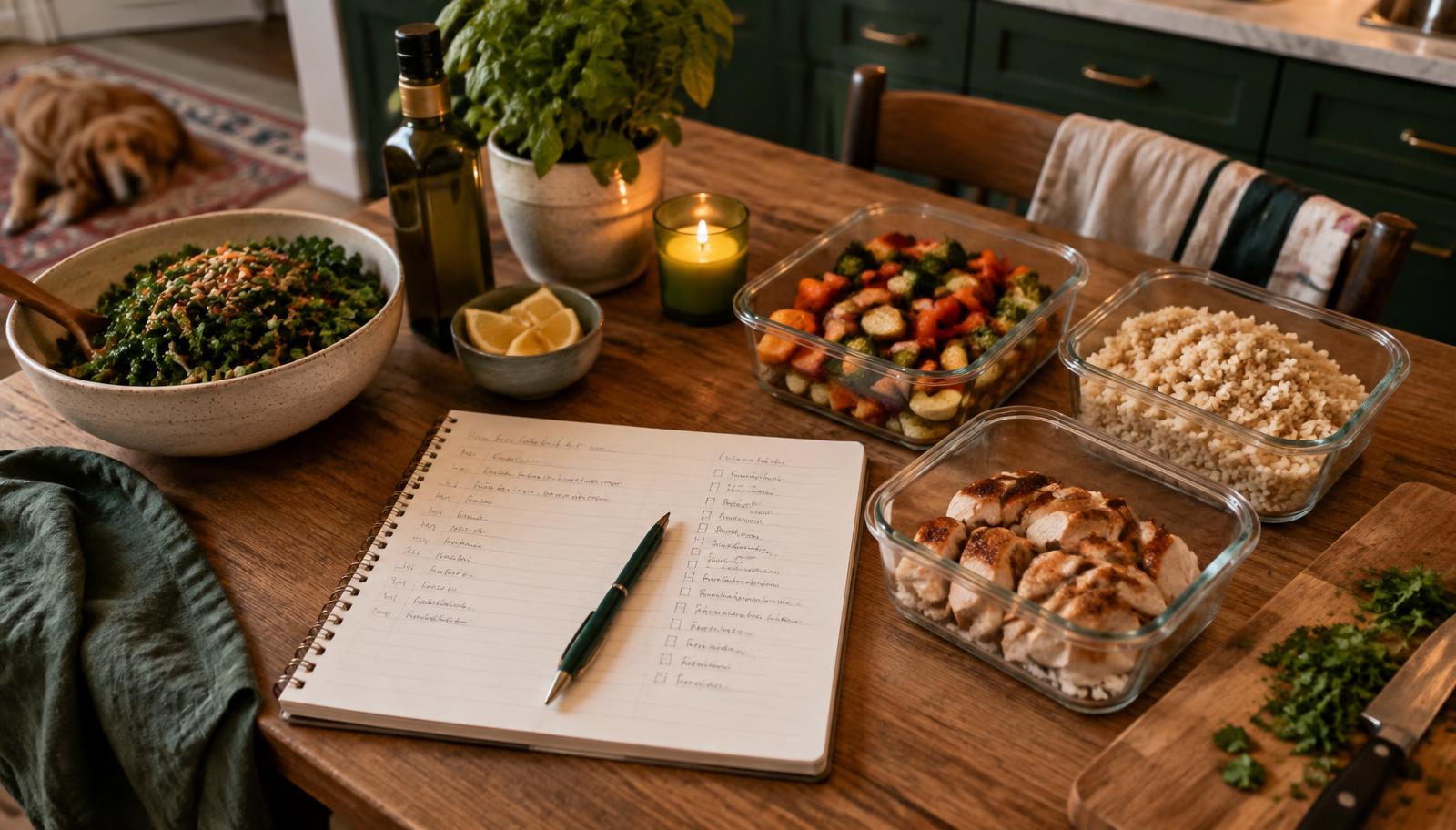
It's 5:47 pm. You've opened the fridge three times. It's full, and somehow there's still nothing to eat. That feeling isn't laziness — it's decision fatigue. A weekly meal plan fixes it by moving every dinner decision to one 30-minute session, so on Tuesday night you don't decide anything. You just cook.
This beginner's guide shows exactly how to meal plan for a week: the method our kitchen team uses, a sample 7-day dinner plan, and the grocery list habits that stop food (and money) from going to waste.
Why weekly meal planning works
- Fewer decisions. You choose seven dinners once instead of negotiating every evening.
- Less waste. The USDA estimates 30–40% of the US food supply is wasted, and much of it happens at home. Planning around what you already bought is the fastest fix.
- Lower spend. Families who plan typically skip impulse buys and last-minute delivery — a single takeout night can cost more than three home dinners.
- Easier sharing. A written plan means anyone in the house can start dinner, not just the person who usually carries it in their head.
How to meal plan for a week in 6 steps
Step 1. Check your week before your recipes
Look at the calendar first. Late meeting Tuesday? Kids' practice Thursday? Mark those as 15-minute nights. Mark one night as leftovers and one as flexible. Most beginners plan five real dinners, not seven — that's the secret to sticking with it.
Step 2. Shop your fridge first
Before choosing recipes, list what's already in the fridge, freezer and pantry — especially anything that expires this week. Half a bag of spinach and a pack of chicken thighs are Monday's dinner, not a future regret. You already paid for that dinner.
Step 3. Pick a simple weekly framework
Theme nights remove 80% of the thinking. A framework we recommend for beginners:
| Day | Theme | Example |
|---|---|---|
| Monday | Use-it-up night | Fridge-clean-out frittata |
| Tuesday | 15-minute dinner | Chicken quesadillas + bagged salad |
| Wednesday | Sheet-pan | Sausage, peppers and potatoes |
| Thursday | Pasta / grain bowl | Pesto pasta with white beans |
| Friday | Fakeout takeout | Beef & broccoli stir-fry |
| Saturday | Cook-once, eat-twice | Slow-cooker chili |
| Sunday | Leftovers or flexible | Chili rice bowls |
Step 4. Overlap your ingredients
Choose recipes that share ingredients. One bunch of cilantro can cover tacos on Tuesday and a rice bowl on Thursday. One rotisserie chicken can become quesadillas and soup. Overlap is what turns a meal plan into real grocery savings.
Step 5. Build the grocery list by store section
Write the list grouped as produce, protein, dairy, pantry and frozen. You'll shop faster and forget less. Check off anything you already have from Step 2 so you never buy a second jar of cumin.
Step 6. Prep 30 minutes, not 3 hours
You don't need a Sunday meal-prep marathon. Wash and chop vegetables, cook one batch of grains and marinate one protein. That's enough to make every weeknight dinner take 20 minutes or less.
Sample 7-day dinner plan for a family of four
Below is a realistic beginner plan built on overlapping ingredients. Prices are approximate US grocery averages for a family of four.
| Day | Dinner | Time | Approx. cost |
|---|---|---|---|
| Mon | Spinach & cheddar frittata, toast | 20 min | $5 |
| Tue | Rotisserie chicken quesadillas | 15 min | $7 |
| Wed | Sheet-pan sausage & veggies | 35 min | $8 |
| Thu | Chicken noodle soup (leftover chicken) | 25 min | $4 |
| Fri | Beef & broccoli stir-fry with rice | 25 min | $9 |
| Sat | Slow-cooker turkey chili | 15 min active | $8 |
| Sun | Chili rice bowls (leftovers) | 10 min | $2 |
Common beginner mistakes (and how to avoid them)
- Planning seven brand-new recipes. Keep 2–3 dinners your family already loves.
- Ignoring the calendar. A 60-minute recipe on a busy night is how plans end in delivery.
- Buying for the plan, not from the fridge. Always shop your fridge first.
- Cooking two dinners. Pick meals with a simple base everyone eats and add-ons for different tastes or goals.
- Keeping the plan in your head. Share it so someone else can start dinner.
Make it even easier with a meal planner app
Paper works. An app works faster. EverYum turns what's already in your fridge into a 7-day dinner plan, balances calories and macros for everyone at the table, and builds a grocery list sorted for your store — so the only decision left is who's chopping the onions.
FAQ
How do I start meal planning for the first time?
Start small: plan five dinners for one week, pick two recipes you already know, shop your fridge first and write one grocery list. Add breakfasts and lunches only once dinners feel automatic.
How long does weekly meal planning take?
About 20–30 minutes to plan and write the list, plus around 30 minutes of optional prep. With a meal planner app it can take under five minutes.
How much does a week of home-cooked dinners cost?
In the US, a simple 7-dinner plan for a family of four can land around $40–$60 depending on store and protein choices. Overlapping ingredients and using leftovers bring the cost down.
Should I plan breakfast and lunch too?
Not at first. Dinner causes the most stress and waste. Once dinners run on a plan, add batch breakfasts like overnight oats and use dinner leftovers for lunch.
- USDA — Food Waste FAQs
- USDA FSIS — Leftovers and Food Safety
- Dietary Guidelines for Americans 2020–2025
Written by the EverYum Kitchen Team — home cooks and recipe developers who test every plan in real US kitchens. Nutrition values are estimates based on USDA FoodData Central.